Automate Clicks with Precision
Overview
The software enables users to schedule automated clicks on specific web elements such as links or buttons with minimal setup. Designed for individuals seeking to streamline repetitive online tasks, it serves as a lightweight utility for enhancing workflow efficiency. The tool is particularly useful in scenarios involving time-sensitive actions on websites—such as ticket purchases, form submissions, or monitoring dynamic content. It targets both casual users and professionals who rely on consistent, precise automation without complex scripting. The developer, Earned Marketing, has positioned the tool within the productivity category, emphasizing ease of use and immediate functionality. Real-world applications include automated responses to flash sales, recurring data entry, or timed navigation across web platforms. The software operates as a browser extension, integrating directly into the user’s browsing environment to execute scheduled actions seamlessly. No prior coding knowledge is required, making it accessible to non-technical users. The developer did not provide additional system requirements beyond the supported operating systems.
Key Features & Capabilities
- Element Identification via Inspect Tool – Users can locate the unique identifier (ID) of any clickable element by using the browser’s built-in “Inspect Element” feature, ensuring precise targeting of links or buttons.
- Schedule Clicks with Minimal Input – Once the element is identified, users enter the required details into the extension popup and initiate a scheduled click with a single action.
- Flexible Element Targeting – If an element lacks an ID, users can manually add one through the browser’s inspection tool, ensuring compatibility with any web interface.
- Automated Execution at Set Times – The software triggers the click automatically when the specified time arrives, eliminating manual intervention.
- Lightweight and Fast – With a file size of 1.2 MB, the tool is optimized for minimal resource consumption and quick loading.
These features support a range of use cases, such as securing limited-time offers, automating form submissions, or managing repetitive navigation tasks. By allowing users to predefine click actions, the tool reduces human error and increases consistency in time-sensitive operations. The workflow is designed to be intuitive: identify, configure, schedule. No advanced configuration or scripting is required. The developer did not specify additional automation logic or integration options beyond basic click scheduling.
User Interface, Workflow & Performance
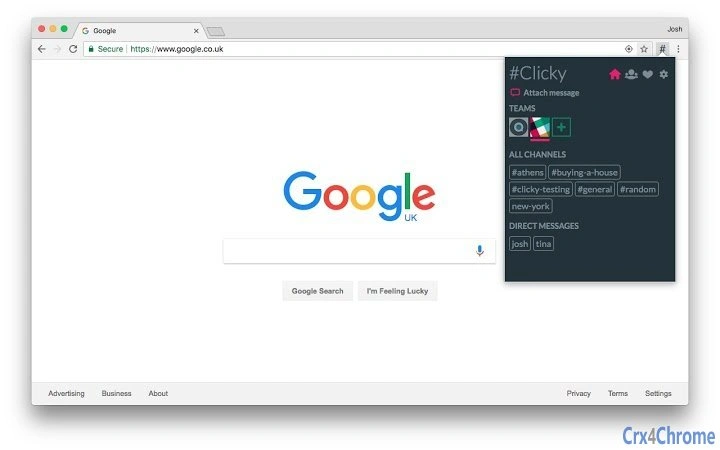
The user interface is embedded within the browser extension popup, presenting a clean and minimal layout focused on essential input fields. Navigation is straightforward, requiring users to access the extension icon, enter the element ID and target time, then confirm the schedule. The workflow follows a three-step pattern: identify, input, schedule—ensuring clarity and reducing cognitive load. The tool does not require a dedicated desktop window or complex setup. Performance is expected to be efficient due to its lightweight nature and direct integration with the browser environment. However, exact performance details were not specified by the developer. Resource usage, including CPU and RAM behavior, remains unconfirmed. Stability is assumed to be consistent with standard browser extensions, though no user reports or crash data were provided. The software operates entirely within the browser context, meaning its performance is dependent on the host browser’s efficiency and the website’s responsiveness.
Compatibility & System Requirements
The software is compatible with Windows, Mac, and Linux operating systems, ensuring broad accessibility across desktop environments. It functions as a browser extension, meaning it requires a modern web browser to operate. The installation size is 1.2 MB, indicating a minimal footprint on disk space. The software version is 1.0.0, suggesting a stable initial release. The developer did not specify exact system requirements such as minimum RAM, processor speed, or browser version. Compatibility information was partially provided, with no details on supported browsers. The developer did not provide additional system requirements beyond the operating systems listed.
Pros and Cons
Pros
- Simple, three-step workflow for scheduling clicks
- Supports manual ID assignment for elements without identifiers
- Lightweight at only 1.2 MB
- Free to use with no licensing restrictions
- Works across Windows, Mac, and Linux platforms
Cons
- No information on supported browsers was provided
- Performance and resource usage details were not specified
- Limited to click automation—no advanced scripting or conditional logic
- Relies on browser extension functionality, which may be restricted in some environments
- Developer did not provide update frequency or support channels
FAQ Section
Is this software available for Windows, Mac, and Linux?
Yes, the software is compatible with Windows, Mac, and Linux operating systems.
Is the software secure to use?
The software operates as a browser extension and does not collect personal data. Users are advised to only install extensions from trusted sources.
Does it require a subscription or payment?
No, the software is completely free to use with no hidden fees or subscription models.
Can I schedule clicks on any website?
Yes, the tool can schedule clicks on any web element that can be identified via the browser’s Inspect Element feature.
How often does the software update?
The developer did not specify the update frequency or release schedule.
Final Thoughts + CTA
For users seeking a no-frills solution to automate repetitive clicks on web pages, this tool delivers on its core promise with simplicity and efficiency. Its lightweight design, cross-platform support, and free access make it a compelling option for both casual and professional users. While it lacks advanced automation features and detailed technical documentation, its focused functionality ensures reliability in targeted use cases. The ability to assign IDs to elements without them adds flexibility, and the minimal setup process enhances usability. Despite the absence of performance metrics and browser compatibility details, the software remains a practical choice for time-sensitive web interactions. If you need to automate clicks on links or buttons without coding, this tool offers a straightforward, effective approach. Download Click Scheduler Now.